Routes, deliveries and delivery notes
Every delivery signed and visible
A simple app for transport and delivery companies: drivers confirm with a signature and photo, the office sees every route live, and customers get their signed delivery note.
Less paper, fewer phone calls
Wet delivery notes, calls to check whether something arrived, claims without proof and invoices waiting until month end. That's still daily life in many small transport companies.
The app doesn't change how you work: it digitises what you already do. Drivers follow their route on the phone, customers sign on screen, and everything reaches the office and the customer automatically.
What you get
Signed delivery note instantly
Signature, photo, time and location for every delivery, with the PDF emailed automatically.
Live office view
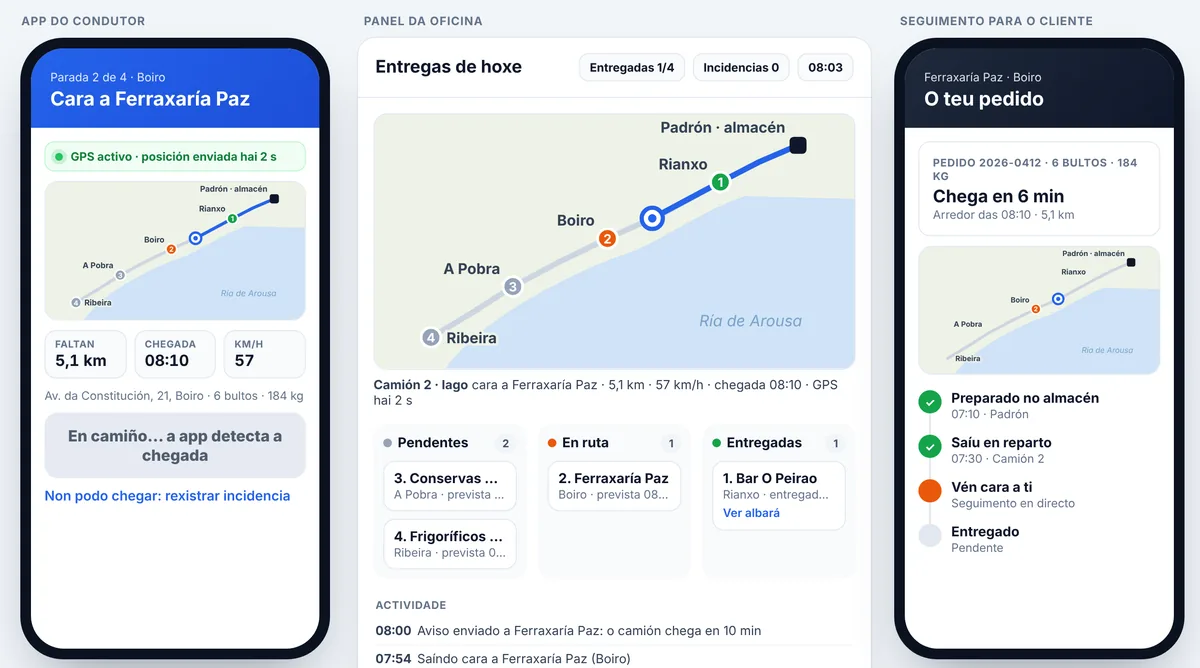
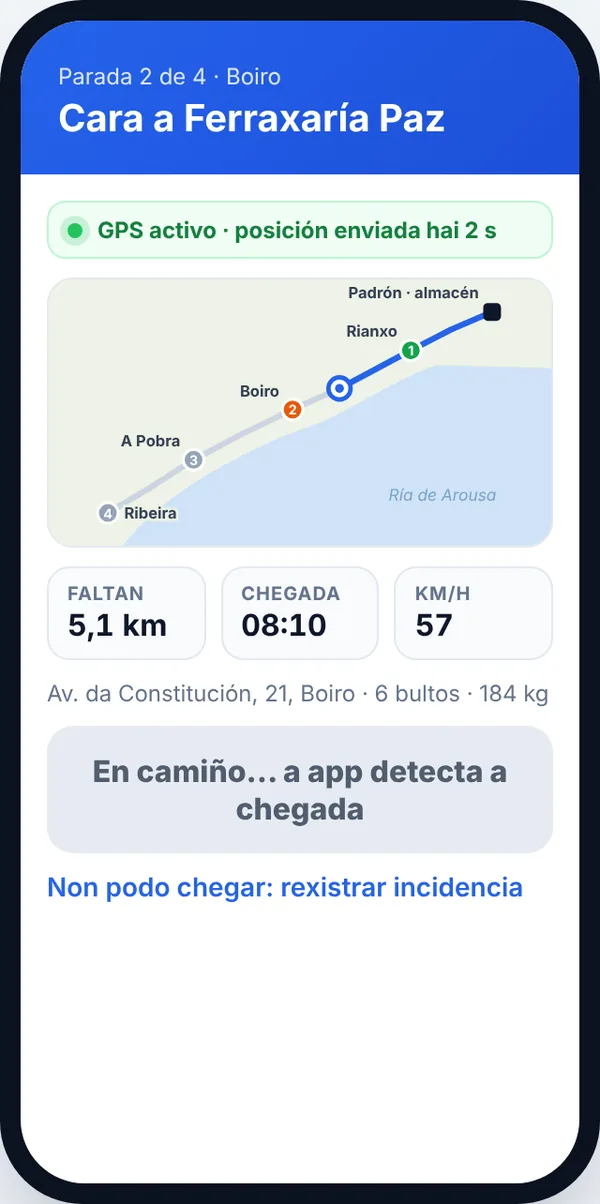
The truck on the map by GPS from departure to delivery, plus what's pending or delivered, without calling the driver.
Customer tracking
A link where customers see when their order arrives and download the delivery note.
Issues recorded
Absences, damage or refusals are logged with a photo and comment on the spot.
What's included
- Driver app with routes, stops, navigation and GPS while the route is running
- Proof of delivery with signature, photo, time and location, even offline
- PDF delivery note emailed automatically to the customer and office
- Office dashboard with the status of every route and any issues
- Tracking link for customers
- User permissions and hosting on European servers
How we set it up
Visit
I talk to your planner and a driver to see how you work.
Setup
I adapt the app to your customers, routes and documents.
Trial
A trial route with one truck before rolling it out.
Live
Short training and support during the first weeks.
If you need it, also
- Route planning and load assignment
- Temperature logging for refrigerated loads
- Vehicle and driver documents with expiry alerts
- Freight invoicing connected to your software
Try it now
This is a sample app (in Galician) for a fictional company. Start the route, follow the truck by GPS to each stop, deliver with a signature and watch the office and customer tracking update.
How much does it cost?
It depends on the number of vehicles and the integrations you need. You get a fixed setup price with VAT included and a monthly fee for hosting and maintenance, with no lock-in.
Request a quoteFrequently asked questions
Do drivers need to install anything?
No: it opens in the phone's browser and can be saved like an app. It works offline and syncs when the connection returns.
Is it worth it for a few trucks?
Yes, it's designed for small and medium companies, starting from one or two vehicles.
Does it connect to my invoicing software?
In most cases, yes, if your software has an API or can import data.
What about electronic transport documents?
From July 2027, EU authorities must accept freight transport information in electronic form (eFTI). The app can be prepared to connect to those platforms.
How many calls a day to find out where an order is?
Tell me how you work and I'll show you the app with your routes.
Related services
Automation & AI
Fewer repetitive tasks: invoices, emails, reports and assistants that use your data.
Custom software
Management tools, customer portals and integrations built around the way you work.
Time tracking
Your team clocks in from their phones and you see hours, corrections and an inspection-ready report.